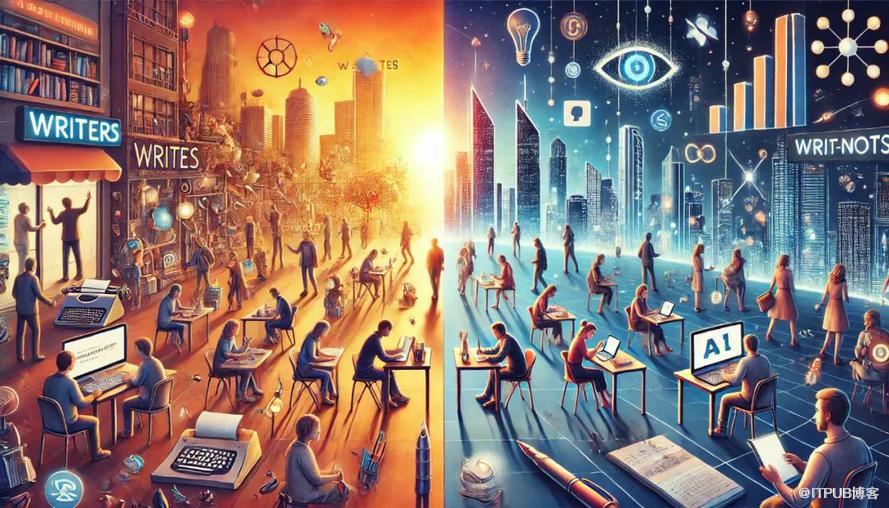
知名投资孵化器Y Combinator创始人Paul Graham昨天发表了一篇新的博文,表示未来20年后,世界上只有两种人:会写作的与不会写作的。
在他看来,写作某种程度上不只是对你思考内容的表达,而是思考本身,不通过写作,你没法获得真正的深度思考。
很多时候,你觉得自己思考清楚了,但是你可以试试把它写下来,然后你才会发现自己的脑子可能完全是一团浆糊。
我深表赞同。所以虽然我也用AI生产非常多的内容,但是还是会主动的、手动的去完成很多内容的撰写,这是我让脑子死得缓慢一些,真正感受自己存在的唯一方式。
下面是对他这篇文章的翻译:
《笔走龙蛇还是笔不成形》
2024年10月
我平常都比较犹豫于做关于科技的预测,但对于这个我感觉相当有把握:未来二十年,能写作的人会越来越少。
如果你是个作家,你会发现一个非常奇怪的现象,那就是有很多人遭遇到写作难题。医生能了解有多少患者在困扰斑点问题;懂数码设备搭建的高手能了解有多少人不懂这门技术;而作家们,他们看得明白有多少人编不出篇章。
许多人觉得写作困难,其根本原因在于,写作本身就是件艰难的事情。想要写得好,你必须需要清晰地思考,而清晰地思考这门技能,更是难得。
然而,反观多数的职业,写作却几乎无处不在。尤其是那些更为高尚的工作,更是对写作有着强烈的需求。
这两种矛盾的力量,既要求写作无处不在,又要对难以完成的写作挑战,不断制造着巨大的压力。这也是为何名誉昭彰的教授最后往往选择剽窃别人的作品。这些事件里让我深感震惊的是,他们剽窃的往往只是些平凡无奇、屡见不鲜的语言,任何一位对写作稍有造诣的人都能扯得出来。也就是说,他们对写作的造诣还没达到那个程度。
过去,人们对于这种来自矛盾力量的压力并没有什么好的应对方法。你可以像JFK一样付钱请人代写,或者像MLK一样揽人之文为己有,但如果你既买不起又偷不到,那只能亲力亲为。而这也导致了近乎所有需要写作的人,都不得不学会这项技能。
但如今,这个世界已经被人工智能打开了新天地。写作带来的压力已经大大减轻。无论你是在学校还是在工作场所,都可以让AI来帮你写作。
这将产生一个被划分为“能写”和“不能写”两部分的世界。我们中间仍会有一些人选择继续写作,因为有的人就是热爱这种状态。但那些介于写作高手与不能写作之间的中间地带将会消失。取而代之的,将只有写作能手和无法动笔之人两类。
那么,这难道不好吗?在科技将某些技能逐步淘汰的过程中,能力的消失不也是常态吗?现在少有人去当铁匠,但这并未成为一大问题。
然而,实际上,这样的情况并不妙。原因我在前文已经提过,写作其实就是思考。而且,有一类思考只有通过写作才能实现。就像Leslie Lamport所说的,“如果你在思考而没有写下来,那你只是以为你在思考。”所以,一个划分为“能写"和“不能写”两个阵营的世界,会比想象中更加危险。这将会是一个“能想”与“不能想”的世界。我知道我想身处那个阵营,我猜你也是一样。
这种情况并非从未出现过。在工业化之前,许多人的工作使他们身强力壮,如今如果你想变得强壮,你可以选择健身。所以,即使如今仍然有强壮的人存在,但那都只是他们自愿选择的结果。
写作也将会如此,同样也只会有那些选择成为智者的人才能保持头脑灵活。
原文:

October 2024
I'm usually reluctant to make predictions about technology, but I feel fairly confident about this one: in a couple decades there won't be many people who can write.
One of the strangest things you learn if you're a writer is how many people have trouble writing. Doctors know how many people have a mole they're worried about; people who are good at setting up computers know how many people aren't; writers know how many people need help writing.
The reason so many people have trouble writing is that it's fundamentally difficult. To write well you have to think clearly, and thinking clearly is hard.
And yet writing pervades many jobs, and the more prestigious the job, the more writing it tends to require.
These two powerful opposing forces, the pervasive expectation of writing and the irreducible difficulty of doing it, create enormous pressure. This is why eminent professors often turn out to have resorted to plagiarism. The most striking thing to me about these cases is the pettiness of the thefts. The stuff they steal is usually the most mundane boilerplate — the sort of thing that anyone who was even halfway decent at writing could turn out with no effort at all. Which means they're not even halfway decent at writing.
Till recently there was no convenient escape valve for the pressure created by these opposing forces. You could pay someone to write for you, like JFK, or plagiarize, like MLK, but if you couldn't buy or steal words, you had to write them yourself. And as a result nearly everyone who was expected to write had to learn how.
Not anymore. AI has blown this world open. Almost all pressure to write has dissipated. You can have AI do it for you, both in school and at work.
The result will be a world divided into writes and write-nots. There will still be some people who can write. Some of us like it. But the middle ground between those who are good at writing and those who can't write at all will disappear. Instead of good writers, ok writers, and people who can't write, there will just be good writers and people who can't write.
Is that so bad? Isn't it common for skills to disappear when technology makes them obsolete? There aren't many blacksmiths left, and it doesn't seem to be a problem.
Yes, it's bad. The reason is something I mentioned earlier: writing is thinking. In fact there's a kind of thinking that can only be done by writing. You can't make this point better than Leslie Lamport did:
If you're thinking without writing, you only think you're thinking.So a world divided into writes and write-nots is more dangerous than it sounds. It will be a world of thinks and think-nots. I know which half I want to be in, and I bet you do too.
This situation is not unprecedented. In preindustrial times most people's jobs made them strong. Now if you want to be strong, you work out. So there are still strong people, but only those who choose to be.
It will be the same with writing. There will still be smart people, but only those who choose to be.